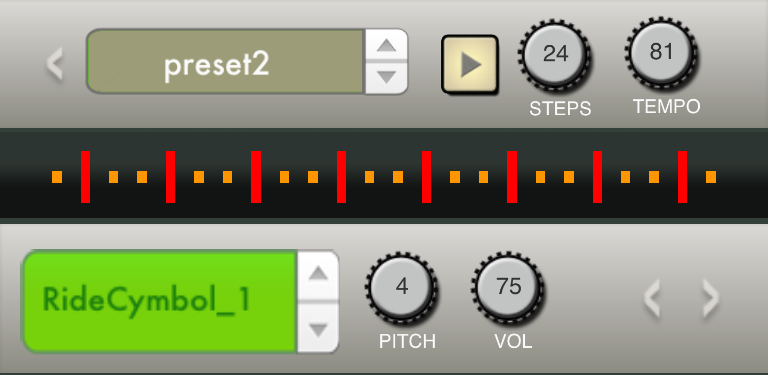
Drum Toy uses an admittedly weird drum machine architecture and concept. You create basic loops using Drum Toy’s Every and Offset knobs, and then feather in the secret ingredient: Probability!
In a way, Drum Toy ‘thinks’ the way drummers do. Find the pocket, lay down the main groove and sprinkle lightly with a few tasty fills or variations here and there to keep things fresh. Drum Toy is set up to force certain beats while leaving others to just the right amount of chance. This simple mechanism yields a surprising array of personality.
Update: Feb 2018
I’ve recently created a Logic/MainStage MidiFX Scripter hack that is really useful as it combines my favorite features from DrumToy & MidiBot!
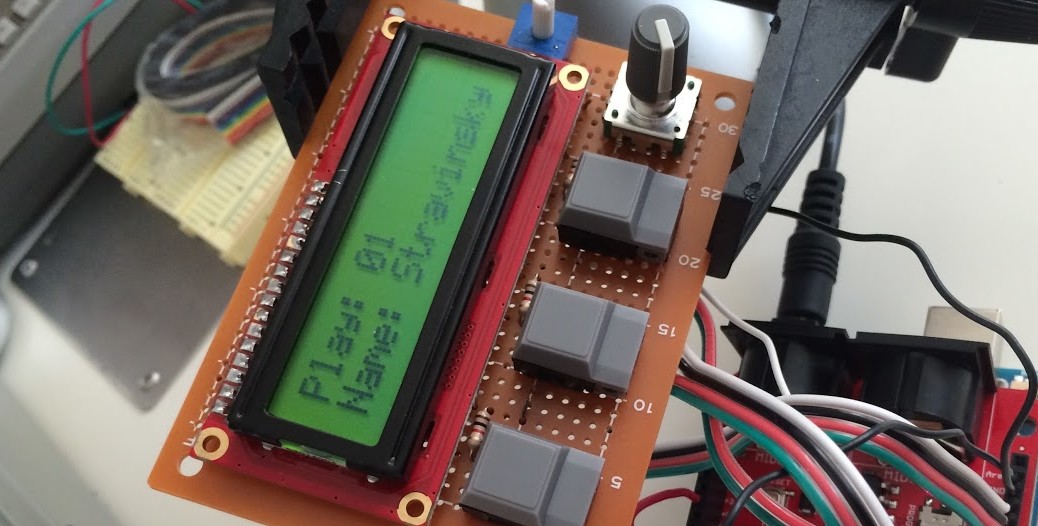
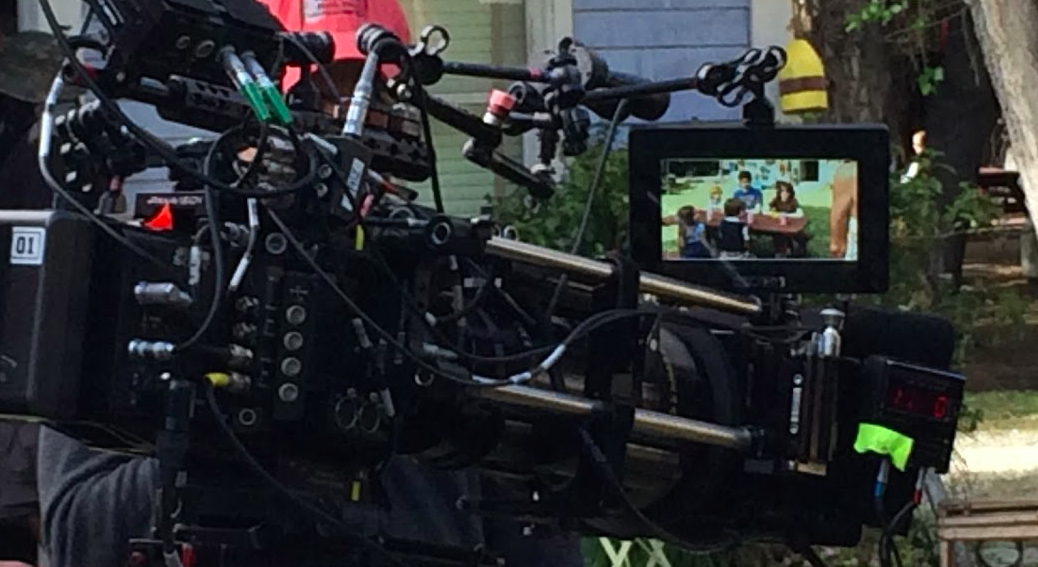
Test harness of the MB1 used for coding and testing the Arduino software.
I’ve created a number of versions of “The Rotator” over the years. This video details one of the first versions that involved creating custom hardware based on the Arduino micro-controller and several parts scavenged from various bits and pieces I had lying around.
Then a couple of years ago while in Japan I made a field trip to “Electric City” in Akihabara where I was able to buy a bunch of electronics parts that allowed me to start work on yet another version.
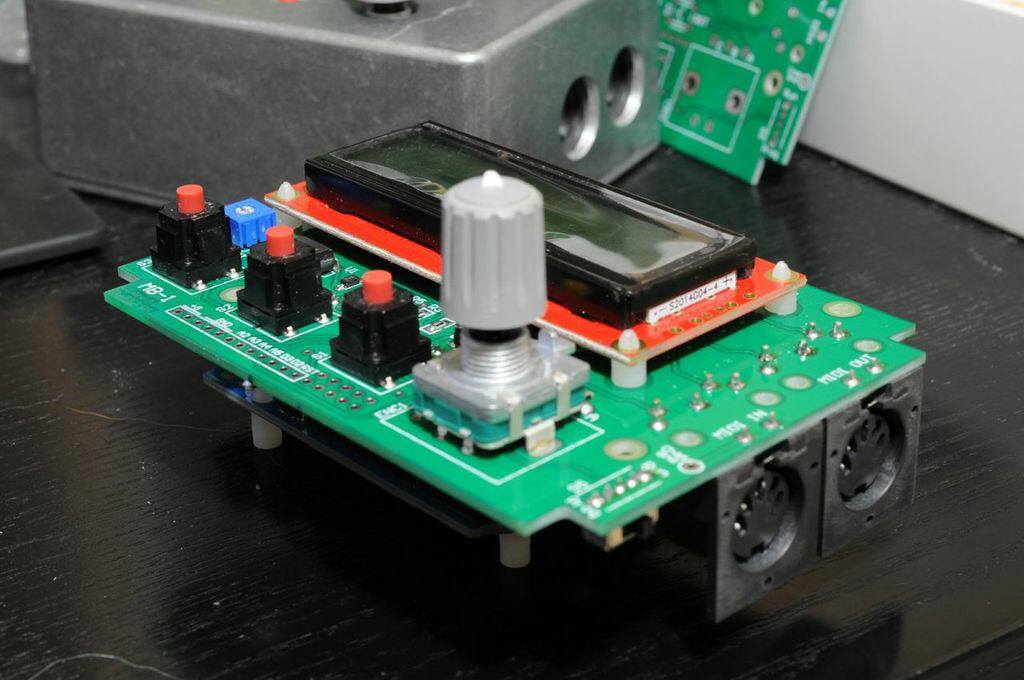
Rev 1 of the MB1 rotator board I designed. (shoutout to Dennis Alichwer from Neve for all his help and advice.)
I wanted to start again with improved hardware and a better layout. I was really excited to find what appeared to be Prophet-V-style gray buttons and some decent push-button rotary encoders. Within a few weeks I was able to get a working breadboard up and running (top left) where I could test the code and work on the software.
Enter the amazing Dennis Alichwer who totally crushed it on laying out a custom circuit board based on my design for the test harness.
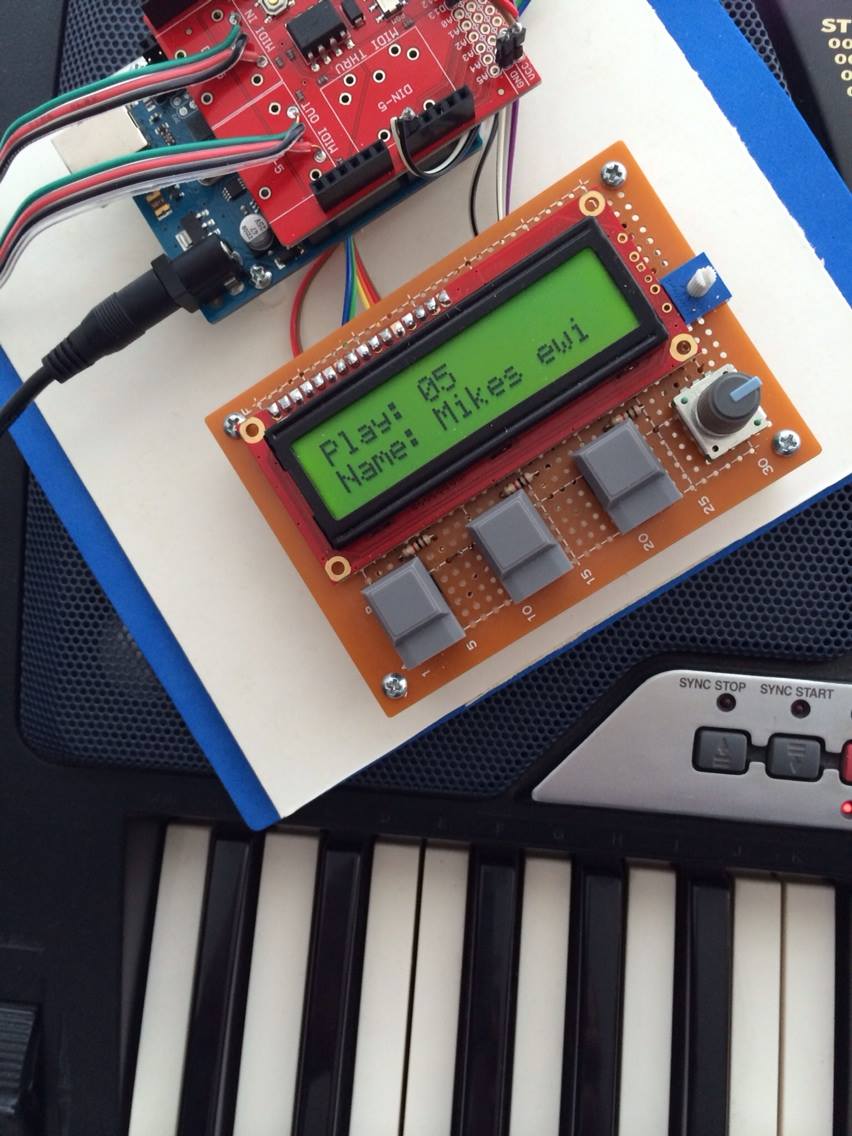
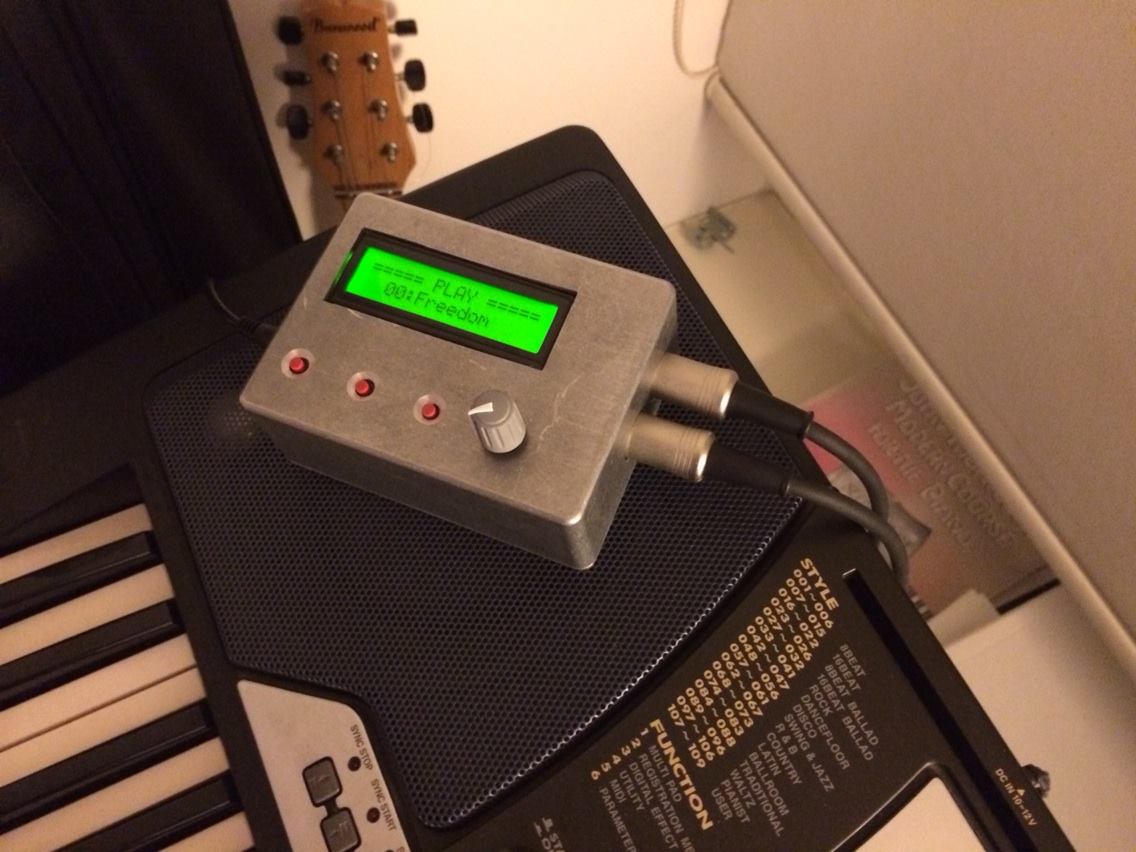
MB1 prototype in a makeshift enclosure
The result was the “MB1” (middle left) – which stands for “Midi Box 1” or possibly “Mike Brecker 1” we’re not sure.
Anyway, I have a couple of boxes in use. One is running the latest rotator software, and the other is running an alpha version of a new toy I’m working on called MidiBot.
Update: Feb 2018
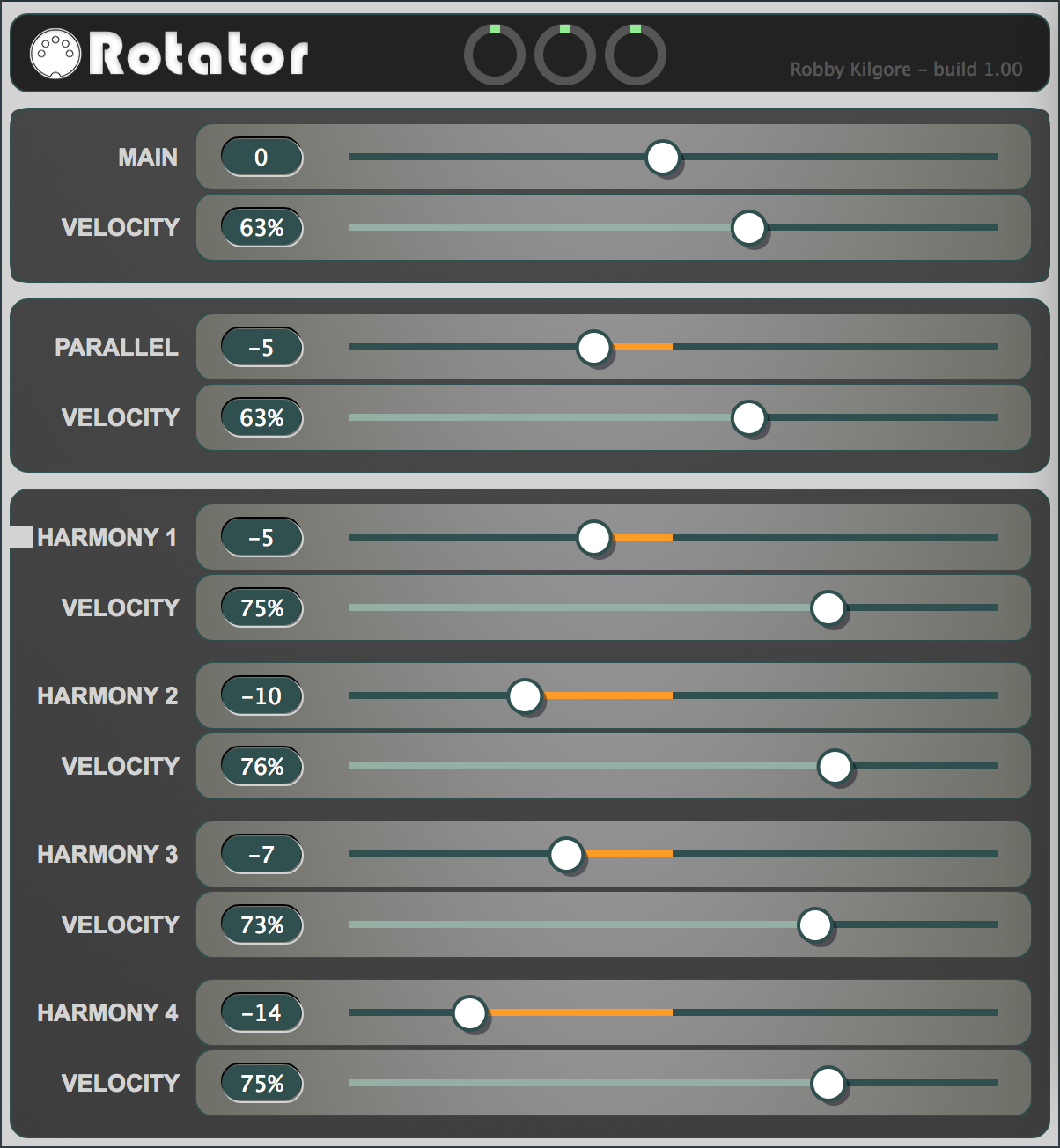
I’ve recently gotten so many requests from people wanting to buy rotators, it just didn’t seem practical to build them myself. So I spent the last month or two working on a port to a MidiFX plugin. I’ve just released a VST and an AU version of the plugin for use in Logic Pro X and MainStage as well as other DAW environments. I’m quite pleased with the UI and it’s proven to be even more flexible than the hardware version in that it can support many more voices and rotations.
Here’s a brief example of what it can do harmonically to some simple triads!
As a kid, I learned to play folk guitar during the early sixties, and I’d experimented with a number of “open tunings”. Though I knew a couple of standard tunings used for bottleneck blues and such, I didn’t take much notice until I started listening to Joni Mitchell.
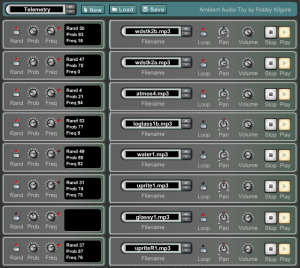
Here’s an incarnation of a graphic interface for creating and controlling probability-based ambient audio soundscapes. WHAT IS THIS? This is a set of 8 rack units. Each one contains a preset bank with a handful of sounds. You can trigger them as a “single shot”, by pressing the play button. A sound will loop indefinitely when the “Loop” mode button is selected.
RANDOM TRIGGERS
On the left hand side of each unit is a “random trigger generator”. Clicking the button marked RND engages the random trigger for that channel. The frequency knob controls the “rate” at which new random numbers are generated. That is, every time the LED goes on or off, a random number between 0-100 is generated.
If the random number is less than the value of “Amount” then the sound will play. The “Prob” knob adjusts the “amount of probability” or the threshold below which the random number will trigger the sound.
It’s best to test each sound by just playing it once with the play button. Some sounds are quite long. These long sounds are best triggered with either a very slow rate of chance or with a low probability of occurring.
MASTER: NEW, LOAD & SAVE
I’ve added the ability to save configurations for the full rack of eight units. You could tweak an existing patch and click “Save” and it will be updated. Tweak an existing patch but type in a new name is equivalent to “Save As”.
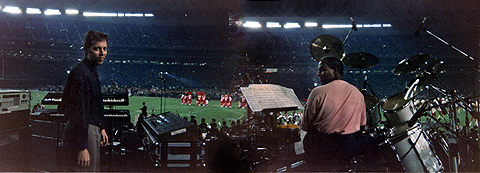
While searching through some storage boxes the other day, I came across an assortment of badges and, passes and photos. There were also several photos taken at various gigs in Japan. This one taken during a Teramasu Hino concert, live at the Tokyo Dome – or “The Egg” as it’s sometimes called. Here’s me and Steve Ferone (Clapton’s drummer) trying to decipher the mysterious ‘half time show’. Go figure…
(left) At a sound check in Yokohama, Japan while touring with Riuichi Sakamoto – 1986. Yamaha had sponsored this tour, and we were awash in fresh gear. Shown here is Riuichi’s one of a kind (at the time) custom made “midi” 9ft concert grand. I also remember scoring two Akai S900 samplers on this trip – several months before they were released in the US.
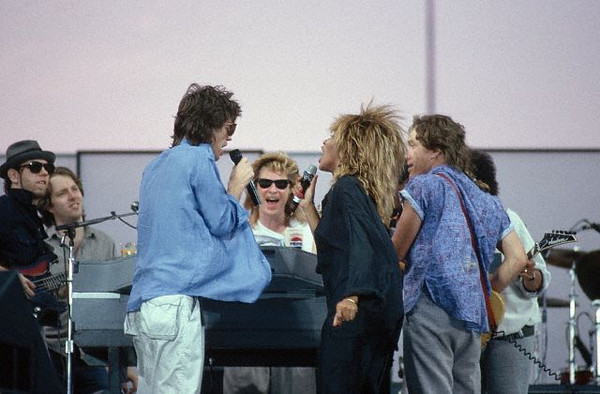
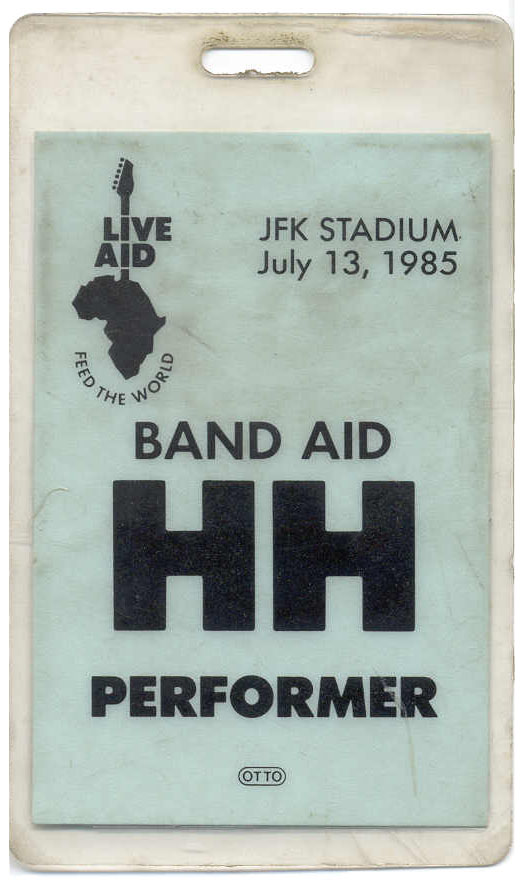
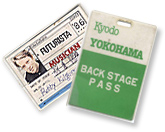
I came across an assortment of backstage passes the other day. The one I’m most proud of is my artist/performer backstage pass from Live Aid (1985) where I played on stage with Hall & Oates, Eddie Kendricks and David Ruffin of the Temptations, Mick Jagger and Tina Turner.
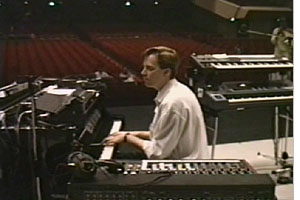
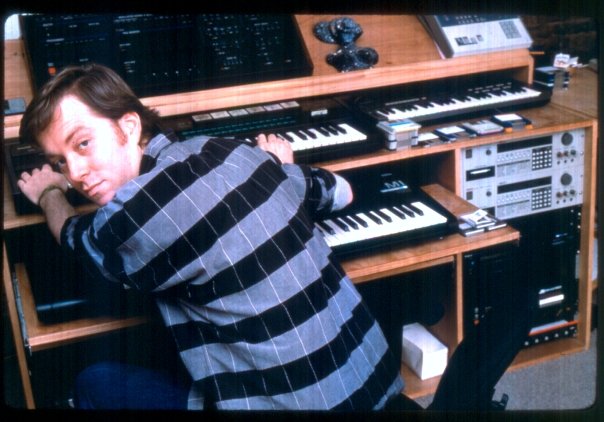
The line up for Mick’s set was essentially the Hall & Oates rhythm section including T Bone Wolk on bass, G E Smith on guitar, Micky Currie on drums and myself on keyboards. Here’s a picture of me at sound check (second from left) – JFK Stadium 1985.
We’d rehearsed for a week in New York and had worked up several tunes with Mick and couple with Tina Turner who was scheduled to join him for a duet towards the end of the set.
I remember it was a million degrees that day in Philadelphia. There was a huge backstage area which had been used as a sort of carnival midway where each act, record label, TV crew, broadcast outlet and every other conceivable entity had set up base camp. They were arranged in rows and aisles and the whole affair took on the appearance of a makeshift tent city. There seemed to be an endless supply of tv and recording trucks, band trailors and hospitality tents belonging to various record labels, MTV, VH1, CNN, ET etc. Quite the circus. We weren’t scheduled to go on till 4pm that afternoon, so everyone was pretty toasted from the heat and stress by the time we went on. Anyway, pretty amazing. In the end, the show was viewed by 1.5 billion people! Supposedly 80% of the worlds tv sets were tuned to Live Aid that day.
 “Boure”
  As a kid, I learned to play folk guitar during the early sixties, and I’d experimented with a number of “open tunings”. Though I knew a couple of standard tunings used for bottleneck blues and such, I didn’t take much notice until I started listening to Joni Mitchell.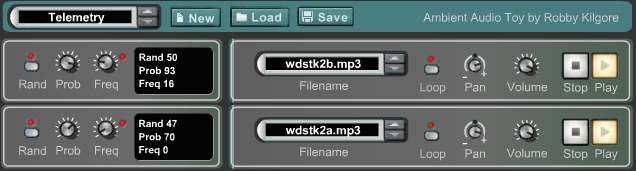
 There were also several photos taken at various gigs in Japan. This one taken during a